Why Customs Paperwork Errors Cost Cross-Border Carriers Thousands (And How to Stop Them)
Why Customs Paperwork Errors Cost Cross-Border Carriers Thousands (And How to Stop Them)
When freight crosses the US-Canada border, precision is everything. A single missing or incorrect document can delay a shipment, trigger added fees, or result in penalties. For carriers, brokers, and shippers running cross-border lanes, paperwork errors aren't a minor annoyance, they're a direct hit to profitability.
And in 2026, with Canada's CARM system fully in force and liability sitting squarely with importers, the cost of getting documents wrong has only gone up. Here's where these errors come from, what they actually cost, and how to stop them at the source.
What a document error actually costs
A paperwork mistake at the border rarely costs just the time to fix it. The real cost cascades:
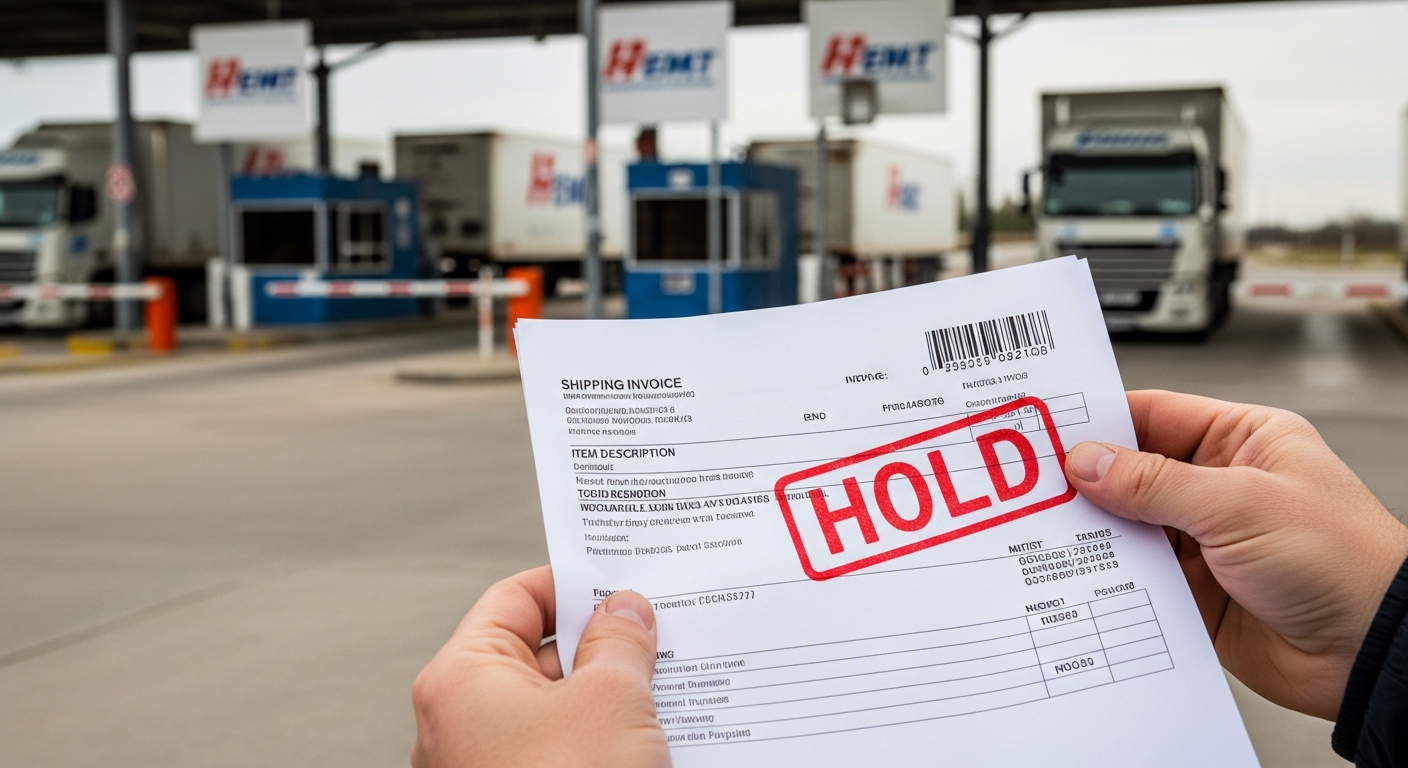
Held freight. If documents are incomplete or don't match, the truck doesn't cross. It sits, burning driver hours, missing delivery windows, and tying up equipment.
Demurrage and detention. Delays at the border or destination rack up demurrage and detention charges that come straight out of margin.
Penalties. Under digital customs systems, inaccurate or non-compliant documentation can trigger administrative penalties. These add up fast for carriers running volume.
Rework. Every error has to be found, corrected, and resubmitted, often under time pressure, often by your most experienced (and expensive) staff.
Relationship damage. Repeated delays strain relationships with shippers, brokers, and customers who depend on freight arriving when promised.
Add it up across a month of cross-border runs and the cost of "small" document errors becomes a serious number.
Where the errors come from
The vast majority of cross-border document errors share a single root cause: manual data entry.
Think about how cross-border documentation typically flows. A commercial invoice arrives. Someone reads it and types the data into another system or onto a customs form. That data then has to match the bill of lading, the manifest, and the eManifest filing. At every step where a human reads and re-types, there's a chance for a transposed number, a misread field, a wrong weight, or a dropped digit.
The systems all have to agree, the commercial invoice, the customs invoice, the BOL, the ACE or ACI eManifest. One manual typo anywhere in that chain creates a mismatch, and mismatches are exactly what customs systems flag. The error isn't a people problem. It's a process problem: too much manual keying across too many documents that all have to line up.
Why 2026 makes this worse
The margin for error has shrunk. With CARM fully implemented, the importer of record carries direct liability, and the system is fully digital and far less forgiving than the paper-and-broker process it replaced. Documentation that's inaccurate or inconsistent doesn't get quietly smoothed over, it causes held shipments and penalties.
For carriers and brokers, that means the old tolerance for "we'll fix it at the border" is gone. The documents need to be right before the truck rolls.
How to stop the errors at the source
You can't eliminate cross-border paperwork, but you can eliminate the manual keying that introduces most of the errors.
When documents are read and extracted automatically by AI, the data comes out accurate and consistent, the same clean values flow into every system and every filing, so the commercial invoice, the BOL data, and the manifest all agree. There's no person transposing a number on the third document of the day. The mismatches that flag at the border simply don't get created.
This is one of the highest-return fixes available to a cross-border operation. The document volume is high, the cost of each error is high, and the manual entry that causes the errors is exactly what AI document processing is built to remove.
See Jannat AI on your documents
Upload any invoice, bill of lading, or customs document and get every field extracted in seconds. No templates, no setup.