eManifest Explained: ACE vs ACI and the Documents Behind Every Cross-Border Load
eManifest Explained: ACE vs ACI and the Documents Behind Every Cross-Border Load
Every carrier moving freight between the US and Canada has to file an electronic manifest before the truck reaches the border. It's a hard requirement, and getting it wrong means delays, penalties, and held freight. Yet a lot of people working cross-border lanes are fuzzy on how the two manifest systems actually work, and, more importantly, on where the data that feeds them comes from.
This is a plain-English guide to ACE, ACI, and the documents behind every cross-border eManifest.
What an eManifest is
An electronic manifest is a digital declaration of what a truck is carrying, submitted to customs authorities before the freight arrives at the border. It gives customs advance information about the shipment so they can assess risk and process the crossing efficiently. Filing in advance isn't optional, it's required by both countries.
The point of the eManifest is speed and security: customs knows what's coming before it arrives, so legitimate freight can move quickly and anything questionable can be flagged ahead of time.
ACE vs ACI: the two systems
The US and Canada each run their own electronic manifest system, and which one you file in depends on the direction of travel.
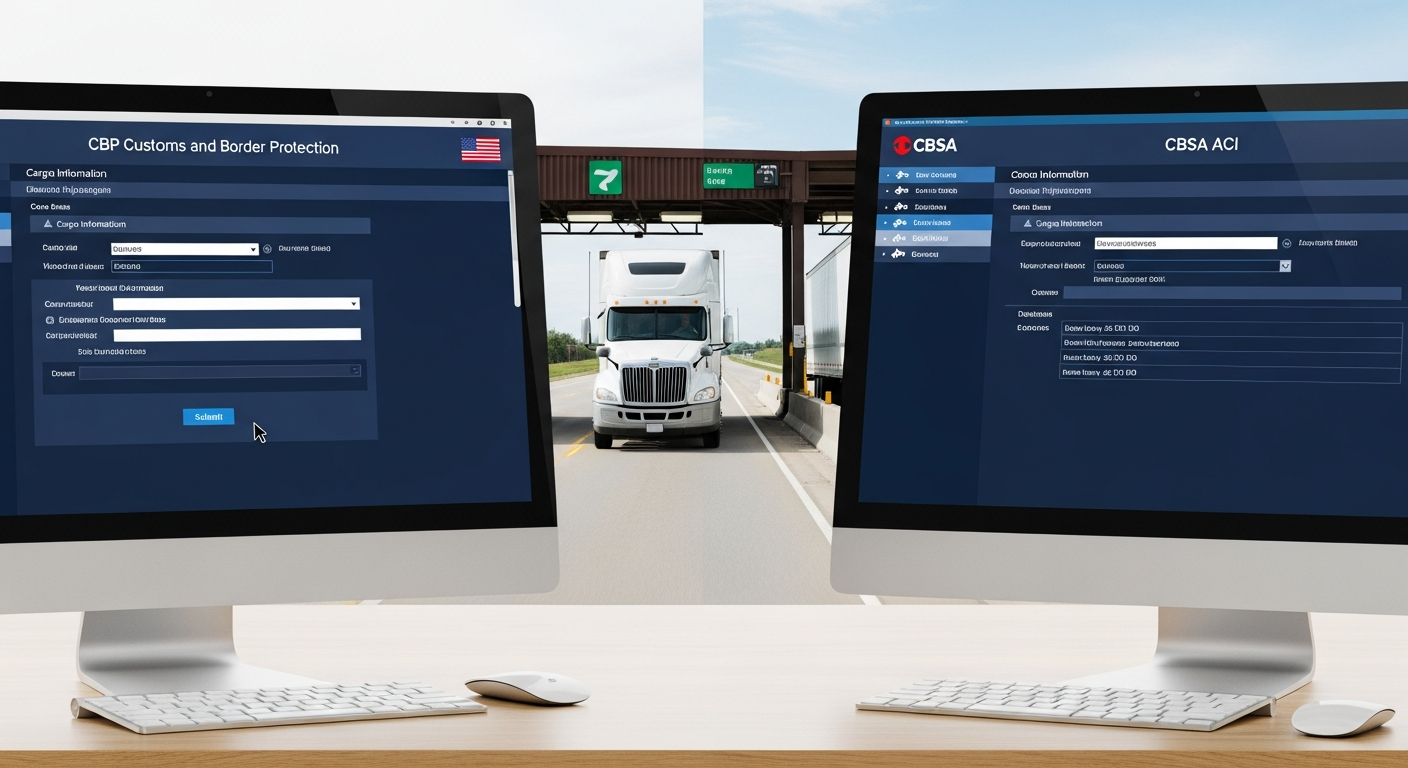
ACE, Automated Commercial Environment (United States). This is the US Customs and Border Protection system. Carriers bringing freight into the US file their electronic manifest through ACE.
ACI, Advance Commercial Information (Canada). This is the Canada Border Services Agency system. Carriers bringing freight into Canada file their electronic manifest through ACI.
So a carrier running both directions on a lane will interact with both systems, ACE heading south, ACI heading north. The core idea is the same in each: submit accurate shipment information electronically, in advance, every time.
The documents behind every eManifest
Here's the part that trips people up. The eManifest isn't a standalone document you create from scratch, it's built from the data on the documents you already have. To file an accurate ACE or ACI manifest, the information has to come off:
- The commercial invoice (what's being shipped, value, parties)
- The bill of lading (shipper, consignee, carrier, freight details)
- The cargo control / manifest documents (the summary of what's on board)
The eManifest data has to match these underlying documents. And critically, the manifest filing has to line up with other systems too, for example, an ACI filing has to be consistent with the importer's CARM account information. Mismatches between the eManifest and the source documents are a common cause of border problems.
Why accuracy across systems is so hard
The challenge isn't understanding ACE or ACI individually, it's keeping the data consistent across all the documents and systems that have to agree.
Think about the typical workflow: a commercial invoice and BOL come in, someone reads them and keys the data into the manifest system, and that data also has to match the customs filing and the importer's account. Every manual re-typing is a chance for a discrepancy. One transposed weight or reference number, and the eManifest no longer matches the paperwork, which is exactly what gets flagged at the border.
The more documents and systems involved, the more places a manual data-entry error can break the chain.
How to keep manifest data clean
The reliable fix is to get the source data off your documents accurately and consistently, without manual keying.
When AI reads your commercial invoices, bills of lading, and cargo documents and extracts the fields automatically, you start your manifest filing from clean, accurate data instead of re-typed data. The same correct values flow everywhere they need to go, so your ACE or ACI filing matches the documents behind it, and matches the other systems it has to agree with.
You still file through ACE or ACI as required. But you do it from a foundation of accurate data, which is what keeps the filing clean and the freight moving.
See Jannat AI on your documents
Upload any invoice, bill of lading, or customs document and get every field extracted in seconds. No templates, no setup.